
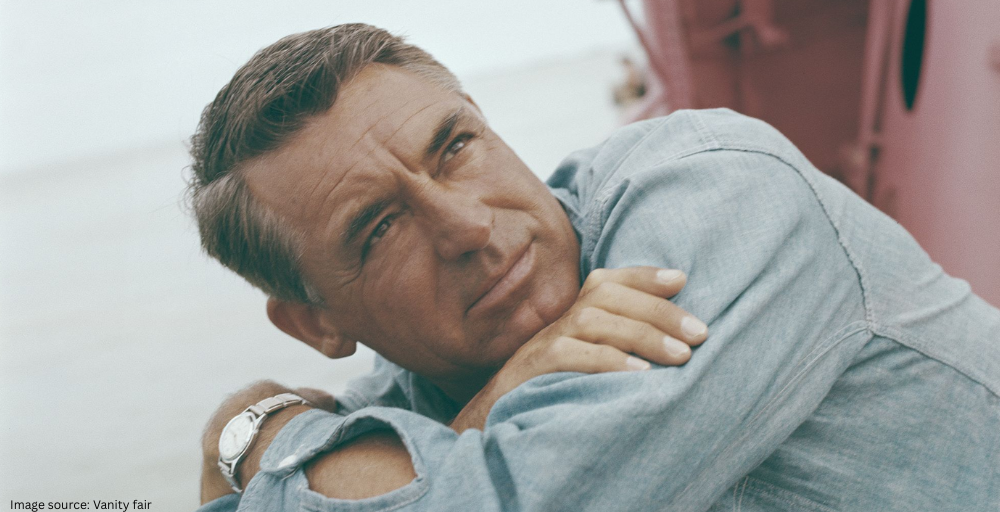
Cary Grant (born Archibald Alec Leach on January 18, 1904, in Bristol, England) was an English-American actor who defined sophistication, charm, and cinematic elegance for four decades in Hollywood. With his distinctive transatlantic accent, debonair style, and effortless command of both comedy and drama, Grant became the gold standard for leading men during the golden age of cinema—a status he has maintained decades after his death.
His estate was valued at approximately $60–80 million at the time of his passing in 1986, making him one of Hollywood’s wealthiest leading men and a business-savvy investor beyond his acting career.
Grant’s final wife was Barbara Harris, whom he married in 1981 at the age of 77 and remained with until his death in 1986. However, his most celebrated personal relationship was with actress Dyan Cannon, with whom he had his only child, daughter Jennifer Grant, born in 1966. Unlike many of his contemporaries, Grant chose to step away from acting at the height of his career in 1966 to focus on fatherhood and private life—a decision that reflected his complex nature as a man who, despite his glamorous public image, struggled with profound anxiety and insecurity throughout his life.
Today, Grant is remembered as much for his legendary film performances—most notably Alfred Hitchcock’s ‘North by Northwest’ (1959) and his romantic chemistry with Audrey Hepburn in ‘Charade’ (1963)—as for his enduring influence on how masculinity, elegance, and charm are portrayed on screen. Decades later, he remains the standard by which leading men are measured, and his films continue to define what it means to be a Hollywood icon.
Quick Facts About Cary Grant
| Attribute | Details |
| Full Name | Archibald Alec Leach |
| Date of Birth | January 18, 1904 |
| Age at Death | 82 Years |
| Birthplace | Bristol, United Kingdom |
| Nationality | English-American |
| Height | 6’0″ (183 cm) |
| Zodiac Sign | Capricorn |
| Profession | Actor, Golden Age Hollywood |
| Final Spouse | Barbara Harris (m. 1981–1986) |
| Children | Jennifer Grant (b. 1966 with Dyan Cannon) |
| Cause of Death | Stroke (November 29, 1986) |
Cary Grant: Age, Date of Birth, and Legacy (1904–1986)
Cary Grant was one of the favourite actors, where he was born on January 18, 1904, in Bristol, England, and passed away on November 29, 1986, at St. Luke’s Hospital in Davenport, California, at the age of 82. He died of a stroke, ending the life of one of cinema’s most enduring and influential figures. As a Capricorn, Grant embodied many of the traits associated with the zodiac sign—ambition, discipline, and a drive for perfection—qualities that made him one of the most respected actors in the industry.
Grant’s birthplace in Bristol, a working-class port city in southwestern England, could not have been more distant from the glamorous Hollywood persona he would craft. He spent his final decades away from the public eye, having voluntarily retired from acting in 1966 at the age of 62.
During this period, he devoted himself to raising his daughter Jennifer and managing his personal life and investments. Though he made rare television appearances and lived a life of relative privacy, Grant remained a cultural icon until his death. His passing in 1986 marked the end of an era—the last major star of Hollywood’s golden age to be widely recognized for his unparalleled charm and sophistication.
Cary Grant Early Life, Family Background, and Childhood in Bristol
Cary Grant was born Archibald Alexander Leach to Elias James Leach, a tailor, and Elsie Maria Kingdon. His childhood in Bristol was marked by hardship and emotional trauma that would shape his psychology and personality for the rest of his life. His parents’ marriage was troubled, and when Grant was just nine years old, his mother suffered a severe nervous breakdown and was institutionalized.
His father told young Archie that his mother had died, a lie that Grant believed for many years. This devastating deception left deep psychological scars—Grant carried guilt and abandonment trauma throughout his adult life, later spending years in therapy to process the betrayal.
Grant’s early interest in performance came not from a stable, nurturing home but from a desire to escape his circumstances. As a young teenager, he became obsessed with acrobatics and physical performance, joining a Boy Scout troupe and later training in acrobatic ballet. This early training instilled in him the physical discipline and body control that would later define his on-screen presence.
He took the stage name ‘Cary’ during his youth, inspired by the actress Cary Williams, and eventually adopted ‘Grant’ as a stage surname. This self-reinvention—from Archibald Leach, the tailor’s son, to Cary Grant, the sophisticated leading man—was not merely a career choice but a psychological necessity, a complete escape from his painful past.
At age 16, Grant left school and pursued theatrical performance, working in music halls and revue shows across England. His ambition to transform himself was fierce and unrelenting. By the late 1920s, he had moved to America and was working in Broadway productions, eventually attracting the attention of Hollywood producers.
Grant’s childhood trauma—the mother he thought was dead, the absent father, the class anxiety of his working-class origins—became the psychological foundation for his carefully curated public persona. Behind the charm and elegance was a man perpetually anxious about being ‘found out,’ about his past being exposed, about losing the carefully constructed identity he had spent a lifetime building.
Cary Grant Career Journey and Breakthrough Roles
Cary Grant’s Hollywood career began in the early 1930s with small film roles that showed promise but offered little recognition. His first significant part was opposite Marlene Dietrich in ‘Blonde Venus’ (1932), followed by roles in B-movies and forgettable comedies. For several years, Grant was simply another contract player at Paramount Studios, struggling to find his footing and develop a distinct on-screen persona. His thick British accent and awkward delivery made him unsuitable for many leading roles, and studio executives were unsure how to market him. This period of struggle lasted nearly a decade before Grant’s breakthrough arrived.
The turning point came in the mid-1930s when Grant was loaned to other studios and began working with top-tier directors. His collaboration with director Howard Hawks on screwball comedies proved revelatory. ‘Bringing Up Baby’ (1938) with Katharine Hepburn showcased Grant’s genius for comedy—his impeccable timing, his ability to be physical and vulnerable, and his capacity to keep pace with one of the sharpest actresses in cinema. This performance established him as a leading man capable of handling both humor and romance. Following this success, Grant appeared in ‘The Philadelphia Story’ (1940), another masterpiece with Hepburn and James Stewart, which cemented his status as a premier actor.
The 1940s solidified Grant’s reputation as a sophisticated leading man. He worked with legendary directors including Frank Capra (‘Arsenic and Old Lace,’ 1944) and Alfred Hitchcock for the first time in ‘Notorious’ (1946) opposite Ingrid Bergman. His collaboration with Hitchcock proved to be one of cinema’s greatest creative partnerships. Over three films—’Notorious,’ ‘To Catch a Thief’ (1955), ‘North by Northwest’ (1959)—Grant and Hitchcock created moments of pure cinematic perfection. Grant’s ability to balance charm with suspicion, elegance with vulnerability, made him the ideal Hitchcock leading man.
In the 1950s and 1960s, Grant continued to work with the industry’s finest: he starred opposite Grace Kelly in ‘To Catch a Thief,’ and in what many consider his final masterpiece, ‘Charade’ (1963), he worked with director Stanley Donen and actress Audrey Hepburn, creating one of cinema’s most perfectly balanced romantic thrillers.
By the early 1960s, Grant was the highest-paid actor in Hollywood, commanding premium salaries for his work. Yet at the height of his success, at age 62 in 1966, Grant made the extraordinary decision to retire from acting to focus on his family and personal life. This choice demonstrated a psychological wisdom that few leading men possessed—a recognition that his public persona, however successful, could not sustain his inner life indefinitely.
Cary Grant Movies and Filmography (1930–1966)
| Year | Movie Title | Role / Character | Key Co-Stars | Director |
| 1938 | Bringing Up Baby | David Huxley | Katharine Hepburn | Howard Hawks |
| 1940 | The Philadelphia Story | C.K. Dexter Haven | Katharine Hepburn, James Stewart | George Cukor |
| 1940 | His Girl Friday | Walter Burns | Rosalind Russell | Howard Hawks |
| 1944 | Arsenic and Old Lace | Mortimer Brewster | Priscilla Lane | Frank Capra |
| 1946 | Notorious | T.R. Devlin | Ingrid Bergman | Alfred Hitchcock |
| 1947 | The Bishop’s Wife | Bishop Henry Brougham | Loretta Young | Henry Koster |
| 1955 | To Catch a Thief | John Robie | Grace Kelly | Alfred Hitchcock |
| 1957 | An Affair to Remember | Nickie Ferrante | Deborah Kerr | Leo McCarey |
| 1959 | North by Northwest | Roger O. Thornhill | Eva Marie Saint | Alfred Hitchcock |
| 1963 | Charade | Peter Joshua | Audrey Hepburn | Stanley Donen |
Grant appeared in over 70 films during his 40-year career, though his filmography is best remembered for approximately 30–40 truly significant works. His co-stars read like a roll call of Hollywood royalty: Katharine Hepburn, James Stewart, Grace Kelly, Audrey Hepburn, Ingrid Bergman, Deborah Kerr, and Rosalind Russell, among others. Every actress who worked with Grant noted his professionalism, his consideration for his scene partners, and his collaborative spirit on set.
Best Cary Grant Movies — Quick Ranked List
• North by Northwest (1959) — Hitchcock’s masterpiece featuring Grant as an ordinary man caught in extraordinary circumstances, showcasing his ability to be both vulnerable and heroic. The iconic crop duster sequence and Mount Rushmore climax remain among cinema’s greatest moments.
• Charade (1963) — Grant’s final major film, a perfectly balanced romantic thriller with Audrey Hepburn that showcases his ability to blend comedy, romance, and suspense. The Paris setting and witty dialogue create one of cinema’s most entertaining films.
• To Catch a Thief (1955) — Sophisticated Hitchcock thriller with Grace Kelly on the French Riviera. Grant’s performance as a retired jewel thief is elegant and charming, perfectly complemented by the stunning cinematography and Kelly’s icy glamour.
• The Philadelphia Story (1940) — Screwball comedy masterpiece with Katharine Hepburn and James Stewart. Grant’s performance as the ex-husband caught between sophistication and sincerity is perfectly calibrated, proving his mastery of comedic timing and emotional nuance.
• Bringing Up Baby (1938) — Grant’s breakthrough comedic performance opposite Katharine Hepburn. His willingness to be physically absurd and emotionally vulnerable in pursuit of laughs established him as one of cinema’s greatest comedic actors, not just a romantic leading man.
Cary Grant Awards, Honors, and Recognition
Cary Grant never won an Academy Award for Best Actor, a fact that remains one of Hollywood’s greatest oversights. However, he received numerous nominations and honors throughout his career, including a Special Oscar in 1970 and the prestigious Cecil B.
DeMille Award, recognizing his lifetime contribution to film. In 1981, at age 77, Grant was honored at the Kennedy Center, where actress Audrey Hepburn delivered an emotional tribute that brought him to tears, acknowledging their enduring friendship and professional respect.
| Award | Category | Year | Status |
| Academy Award (Oscar) | Best Actor | 1945 (Notorious) | Nominated |
| Golden Globe | Best Actor in Motion Picture | 1959 | Nominated |
| BAFTA Award | Best British Actor | 1952 | Winner |
| Kennedy Center Honors | Lifetime Achievement | 1981 | Recipient |
| Cecil B. DeMille Award | Career Achievement | 1970 | Recipient |
Grant’s lack of competitive wins at the Academy Awards is not a reflection of his talent or impact, but rather the particular nature of Oscar voting and the changing preferences of the Academy over his career span. During the 1940s, when he was at his peak, the Academy often favored dramatic over comedic performances.
By the time his later works would have been strong contenders, Grant had largely stepped away from major film roles. Despite this, his influence on cinema and performance style has proven far more enduring than many Oscar-winning actors of his era.
Cary Grant Wife, Relationships, and Daughter Jennifer
Cary Grant was married to Barbara Harris from 1981 until his death in 1986, when he was already 82 years old. However, his most famous and formative relationship was with actress Dyan Cannon, with whom he had his only child, daughter Jennifer Grant, born in 1966.
Grant was married five times throughout his life, but he remained notoriously private about his personal relationships, aggressively protecting his privacy and controlling the narrative around his personal life through litigation against anyone who threatened to reveal details he wished to keep hidden.
| Partner Name | Years Together | Married/Dating | Notes |
| Betsy Drake | 1949–1962 | Married | Actress; 13-year marriage |
| Dyan Cannon | 1961–1968 | Married | Actress; mother of Jennifer; age gap: 34 years |
| Barbara Harris | 1981–1986 | Married | Final wife; 5-year marriage; Grant was 77 at marriage |
Grant became a father for the first time at age 62 to Jennifer Grant with actress Dyan Cannon. This milestone marked a turning point in his life and psychology. After decades of building a carefully controlled public persona, fatherhood gave Grant a new purpose outside of his professional identity.
In 1966, the same year Jennifer was born, Grant made the decision to step away from major film roles and focus on his family. Though he was still at the height of his earning power and could command premium salaries for any role he chose, Grant prioritized his role as a father and personal development over career advancement.
Barbara Harris, Grant’s final wife, was an actress 34 years his junior. They married when Grant was 77 and she was in her early 40s.
Though their marriage lasted only five years, ending with his death, those years represented Grant’s final chapter—a man at peace with his legacy, focused on family, and no longer driven by the anxieties that had plagued much of his earlier life. Jennifer Grant, his only child, survived him and has lived a life largely away from the spotlight, honoring her father’s late-life prioritization of privacy and family over public profile.
Cary Grant Net Worth and Financial Legacy
As of his death in 1986, Cary Grant’s net worth was estimated at approximately $60–80 million, making him one of the wealthiest actors of his generation and one of Hollywood’s most financially successful leading men. This wealth was not accumulated solely through acting salaries, though his peak earnings were extraordinary. By the 1950s and 1960s, Grant was commanding salaries of $1 million or more per film—unprecedented sums for the era—equivalent to approximately $8–12 million per film in 2026 dollars.
Beyond his acting income, Grant was a savvy investor and businessman. He carefully managed his career, negotiated favorable contracts that included percentage points on film revenues, and invested his earnings in real estate and securities. Unlike many Hollywood stars who squandered their fortunes on lavish spending, Grant lived relatively modestly considering his wealth. He drove quality vehicles, maintained elegant homes, and traveled extensively, but he was not known for extravagant excess.
His wealth was built on discipline and smart financial planning, reflecting his Capricorn nature and his working-class consciousness—despite his glamorous public image, Grant never forgot the financial insecurity of his Bristol childhood.
Grant’s decision to retire from major filmmaking in 1966 was also financially intelligent. By stepping away at the height of his earning power, he was able to focus on managing his existing wealth through investments and film residuals. His films continued to generate income through reruns, television broadcasting, and eventually home video releases.
At the time of his death in 1986, Grant’s estate was substantial enough to provide security for his daughter Jennifer and to leave a significant legacy. His financial acumen, combined with his artistic talent, made him not just a Hollywood icon but a genuinely wealthy and business-savvy entertainer.
| Income Source | Peak Earnings Period | Estimated Contribution |
| Acting Salaries | 1950s–1960s | $1M+ per film peak |
| Film Residuals & Reruns | Ongoing after 1966 | Significant ongoing income |
| Investments & Real Estate | Throughout career | Strong portfolio builder |
| Television Appearances | Selective, 1960s onward | Premium rates for brief roles |
Lesser Known Facts About Cary Grant
• Despite his elegant public persona, Cary Grant was plagued by deep-seated anxiety and insecurity throughout his life, never fully believing in his own stardom even at the height of his fame in the 1950s and 60s. He regularly sought therapy and was an early advocate for the therapeutic use of LSD in the late 1950s and early 1960s, believing that the hallucinogenic drug helped him process childhood trauma and anxiety. His openness to psychedelic therapy, unusual for the era, reflected his commitment to understanding himself and healing his psychological wounds.
• Grant was obsessed with controlling his image and notoriously litigious, aggressively suing anyone who made claims about his private life that he wished to keep hidden. This careful control of his public persona created a fascinating gap between the man the world saw—effortlessly charming and sophisticated—and the man he actually was—anxious, private, and fiercely defensive about his boundaries. He won several high-profile lawsuits against tabloids and individuals who attempted to reveal details about his personal relationships and private life.
• He became a father for the first time at 62 years old to daughter Jennifer with actress Dyan Cannon in 1966. This marked a turning point in his life, leading him to voluntarily retire from major film roles to focus on fatherhood. At an age when most leading men would have been entering decline, Grant chose personal growth and family over continued professional success, a decision that revealed his psychological sophistication and emotional maturity.
• Grant spent his childhood in working-class Bristol, England, and his early years were marked by profound trauma: his mother’s severe mental illness leading to institutionalization, his father’s lie that she had died, and the resulting psychological abandonment. He reinvented himself completely to become Hollywood’s epitome of sophistication, driven by a desperate need to escape his past and prove his worth through charm and professional excellence.
• He was known for his meticulous perfectionism on set and his ability to do almost everything well—acting, comedy, drama, physical performance, acrobatics, and languages. Directors loved working with him because he was a true professional who could execute any vision perfectly. His discipline and work ethic came from his years in British music halls and theater, where he learned to be reliable, flexible, and continuously self-improving.
• Despite his sophisticated transatlantic accent—one of his most iconic vocal trademarks—Grant was acutely conscious that his natural Bristol accent revealed his working-class origins. He deliberately cultivated and perfected his accent as a form of class transformation, viewing proper speech as a key element of his reinvention from Archie Leach to Cary Grant. This attention to vocal performance paralleled his meticulous work on every aspect of his on-screen presence.
Frequently Asked Questions About Cary Grant
How old is Cary Grant in 2026?
Cary Grant was born on January 18, 1904, and passed away on November 29, 1986, at the age of 82. He lived to be 82 years old, never reaching his 83rd birthday. As of 2026, he has been deceased for 40 years, but his films and cultural impact remain timeless.
Was Cary Grant married? Who was his wife?
Yes, Cary Grant was married multiple times throughout his life. His final wife was Barbara Harris, whom he married in 1981 at the age of 77 and remained with until his death in 1986. He was also married to actress Dyan Cannon, with whom he had his only child, daughter Jennifer Grant, born in 1966.
What happened to Cary Grant’s daughter Jennifer?
Jennifer Grant, born in 1966 to Cary Grant and Dyan Cannon, survived into adulthood and has lived a relatively private life away from the Hollywood spotlight. She was particularly important to her father’s life, especially after 1966 when Grant stepped back from acting to focus on fatherhood. Jennifer’s existence was a turning point in Grant’s life, shifting his priorities from career to family.
What is considered Cary Grant’s best film?
Most film critics and audiences consider ‘North by Northwest’ (1959) to be Cary Grant’s greatest film and one of the greatest films ever made. Directed by Alfred Hitchcock, it showcases Grant’s perfect blend of charm, sophistication, comedy, and dramatic ability. The film features iconic sequences including the famous crop duster scene and the Mount Rushmore climax. Other top contenders include ‘Charade’ (1963) with Audrey Hepburn and ‘To Catch a Thief’ (1955) with Grace Kelly.
What was Cary Grant doing when he died?
Cary Grant died on November 29, 1986, at St. Luke’s Hospital in Davenport, California, from a stroke. He was 82 years old. He had largely retired from acting in 1966 and spent his final 20 years living a quieter life focused on his family, his investments, and his personal development, away from the public spotlight. His death came after a full life lived on his own terms.
Why was Cary Grant so unhappy despite his success?
Despite his glamorous public image and tremendous professional success, Cary Grant suffered from deep anxiety and insecurity throughout his life. He was shaped by childhood trauma, including his mother’s mental illness and institutionalization and his father’s deception that she had died. Grant spent much of his life in therapy, seeking to understand and heal from these wounds. His perfectionism, his obsession with controlling his image, and his periodic mood swings reflected the psychological burden he carried. He never fully came to terms with his past, though his later exploration of therapeutic LSD use suggest he was actively seeking healing.
Did Cary Grant and Audrey Hepburn have a real relationship?
A: Cary Grant and Audrey Hepburn had a professional and deeply respectful relationship, co-starring together in ‘Charade’ (1963). While there was undeniable chemistry on screen, their relationship was based on mutual artistic respect and admiration. At the 1981 Kennedy Center Honors, Hepburn gave an emotional, eloquent tribute to Grant that brought him to tears, reflecting the depth of their lifelong friendship and the significance of their professional collaboration.
What did Doris Day say about Cary Grant?
A: Doris Day worked with Cary Grant in ‘That Touch of Mink’ (1962) and spoke fondly of him as a consummate professional and genuinely kind person on set. Day, like many of Grant’s co-stars, praised his professionalism, his consideration for his scene partners, and his collaborative spirit during filming. Despite Grant’s reputation for privacy and image control off-set, his co-stars consistently noted his courtesy and professionalism during work.
More Golden Age Actors You Might Like
• Audrey Hepburn (1929–1993) — Legendary actress and icon, Cary Grant’s co-star in ‘Charade’ (1963), known for ‘Breakfast at Tiffany’s’ and ‘Roman Holiday’. Her elegance and sophistication made her one of cinema’s most beloved stars.
• Grace Kelly (1929–1982) — Elegant actress who starred alongside Grant in ‘To Catch a Thief’ (1955), later became Princess of Monaco. Her cool sophistication and beauty made her one of Hollywood’s most glamorous stars before her royal retirement.
• Katharine Hepburn (1907–2003) — Hollywood legend who starred opposite Grant in ‘The Philadelphia Story’ (1940) and ‘Bringing Up Baby’ (1938). Her sharp wit, fierce independence, and comedic genius made her one of cinema’s greatest actresses.
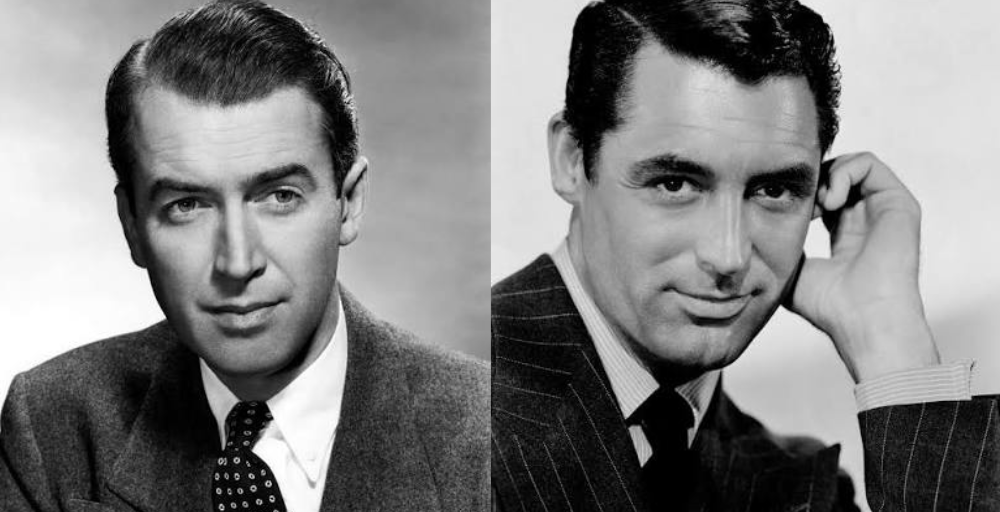
• James Stewart (1908–1997) — American icon and contemporary of Grant, known for Hitchcock collaborations and everyman charm. Starred with Grant in ‘The Philadelphia Story’ (1940).
• Ingrid Bergman (1915–1982) — Swedish actress who starred with Grant in Hitchcock’s ‘Notorious’ (1946). Her beauty and dramatic talent made her one of the most respected actresses of the era.









Leave a Reply